Cantonese Chow Mein (Crispy Hong Kong–Style Noodles)
Introduction
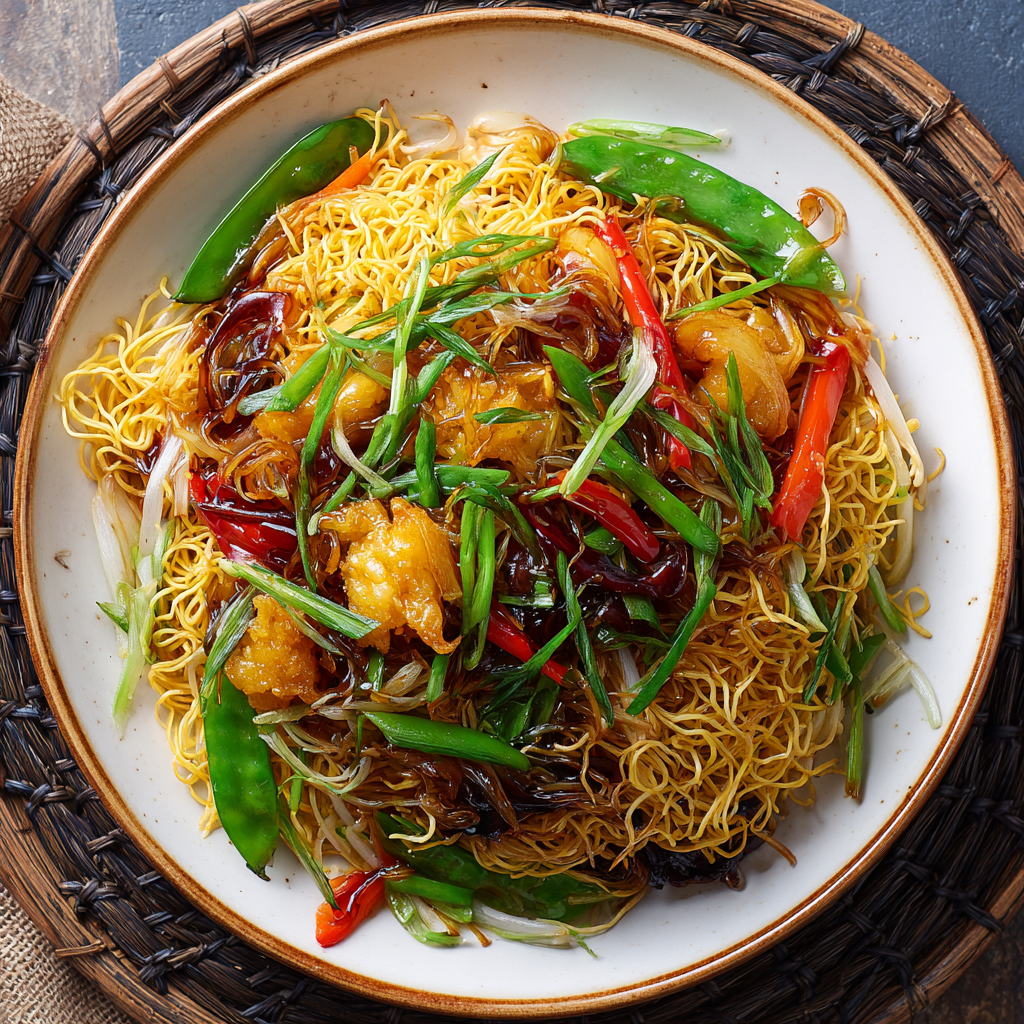
Cantonese Chow Mein (Crispy Hong Kong–Style Noodles) is one of the most iconic noodle dishes in Cantonese cuisine, celebrated for its irresistible contrast of textures and its delicate balance of savory, slightly sweet flavors. Unlike saucy Americanized chow mein, the Hong Kong version focuses on pan-fried egg noodles that are crispy on the outside yet tender inside, lightly glazed with soy-based seasoning rather than drowned in sauce.
This dish is a cornerstone of Cantonese home cooking and restaurant menus alike, often served as a quick lunch, a late-night comfort meal, or a centerpiece dish at family-style dinners. What makes Cantonese Chow Mein special is its simplicity—few ingredients, fast cooking time, and a technique-driven approach that rewards patience and precision.
More breakfast ideas you’ll love
Ready in under 15 minutes, Cantonese Chow Mein (Crispy Hong Kong–Style Noodles) proves that you don’t need complicated steps or hard-to-find ingredients to achieve restaurant-quality results. The key lies in properly crisping the noodles, layering flavors thoughtfully, and tossing gently to preserve that signature crunch.
Whether you’re craving authentic Hong Kong flavors, looking to recreate your favorite takeout dish at home, or simply want a fast yet deeply satisfying noodle meal, this recipe delivers everything you need—and more.
Why You’ll Love This Cantonese Chow Mein Recipe
There are countless noodle recipes out there, but Cantonese Chow Mein (Crispy Hong Kong–Style Noodles) stands apart for several reasons:
-
Authentic Hong Kong technique that focuses on texture rather than heavy sauces
-
Ultra-crispy noodles with golden, crackly edges
-
Light yet deeply savory flavor from soy sauce, oyster sauce, and a touch of sugar
-
Ready in 15 minutes, making it perfect for busy weeknights
-
Highly customizable with proteins or extra vegetables
-
Better than takeout, fresher and less greasy
This dish also teaches a fundamental Cantonese cooking principle: let ingredients shine without overpowering them. Each bite offers a perfect balance of crunch, chew, and umami.
Understanding Cantonese Chow Mein (Hong Kong–Style)
Before cooking, it helps to understand what makes Cantonese Chow Mein different from other noodle dishes.
Chow Mein vs. Lo Mein
While both dishes use egg noodles, the cooking method is what sets them apart:
-
Chow Mein: Noodles are pan-fried until crispy
-
Lo Mein: Noodles are boiled and tossed with sauce
In Cantonese Chow Mein (Crispy Hong Kong–Style Noodles), the noodles are the star. The vegetables and sauce play a supporting role, enhancing texture and flavor without softening the noodles too much.
The Role of Texture
Cantonese cuisine places huge emphasis on texture. The ideal chow mein noodle should be:
-
Crispy on the bottom
-
Slightly chewy in the center
-
Glossy but not soggy
Achieving this requires restraint—especially when tossing and saucing.
Ingredients + Tips
Noodles & Vegetables
-
12 oz chow mein egg noodles (thin, fresh Hong Kong–style)
Tip: Fresh noodles deliver the best texture. If using dried, soak briefly—do not fully boil. -
½ small yellow onion, thinly sliced
Adds subtle sweetness and aroma. -
5 stalks green onions, cut into 2-inch pieces (whites and greens separated)
Whites add fragrance; greens add freshness. -
2 cups bean sprouts
Essential for crunch and lightness. -
3 tablespoons corn oil or neutral oil
High smoke point is critical for crisping. -
1 teaspoon sesame oil (to finish)
Adds aroma—never cook it directly.
Stir-Fry Sauce
-
2 tablespoons dark soy sauce
Adds color and depth, not just salt. -
1 tablespoon regular soy sauce
Provides balanced saltiness. -
1 tablespoon oyster sauce
Enhances umami richness. -
½ teaspoon fish sauce
Optional but authentic—boosts savoriness. -
1 tablespoon granulated sugar
Balances the salty notes. -
1 tablespoon water
Helps distribute the sauce evenly.
Tip: Always mix the sauce before cooking—stir-frying happens fast.
Step-by-Step Instructions
Step 1: Soften the Noodles
Place chow mein noodles in a heatproof bowl. Pour boiling water over them and soak for 30 seconds to 1 minute until just loosened. Drain thoroughly.
Important: Over-soaked noodles will never crisp properly.
Step 2: Prepare the Sauce
In a small bowl, combine dark soy sauce, regular soy sauce, oyster sauce, fish sauce, sugar, and water. Stir until sugar dissolves completely.
Step 3: Sauté the Aromatics
Heat 1 tablespoon oil in a wok over medium-high heat. Add sliced onion and the white parts of the green onions. Stir-fry for 1 minute until fragrant. Remove and set aside.
This step infuses the oil with flavor without softening the noodles later.
Step 4: Crisp the Noodles
Add 1 tablespoon oil to the wok. Spread noodles evenly in the pan. Do not stir.
Let cook for 2 minutes until golden and crisp underneath. Flip carefully, drizzle remaining oil around the edge, and cook another 2 minutes.
Patience is key—movement destroys crispiness.
Step 5: Combine Everything
Add sautéed onions, green onion greens, bean sprouts, and sauce. Toss gently for 1–2 minutes until evenly coated and heated through.
Step 6: Finish and Serve
Remove from heat. Drizzle with sesame oil. Toss lightly and serve immediately while hot and crispy.
Expert Tips for Perfect Cantonese Chow Mein
-
Use a well-seasoned wok or cast-iron pan
-
Cook noodles in one even layer
-
Resist the urge to stir too early
-
Add sauce around the edges, not directly on noodles
-
Always serve immediately
Protein Add-Ins (Optional)
Cantonese Chow Mein (Crispy Hong Kong–Style Noodles) is delicious on its own, but proteins can be added:
-
Shrimp – Quick-cooking and delicate
-
Chicken breast – Thinly sliced
-
Beef flank steak – Velvety and rich
-
Char siu – Traditional Cantonese option
Cook proteins first, remove, then proceed with noodles.
Variations
-
Vegetarian Chow Mein: Skip fish sauce and add mushrooms
-
Spicy Version: Add white pepper or chili oil
-
Extra Crispy: Press noodles lightly with spatula
-
Low Sodium: Use reduced-sodium soy sauce
Storage & Reheating
This dish is best eaten fresh, but leftovers can be stored:
-
Refrigerate: Up to 2 days
-
Reheat: Dry pan over medium heat
-
Avoid microwaving—it softens noodles
Serving Suggestions
Serve Cantonese Chow Mein (Crispy Hong Kong–Style Noodles) with:
-
Steamed bok choy or gai lan
-
Light Chinese soups
-
Dumplings or spring rolls
-
Chili oil or soy sauce on the side
Cantonese Chow Mein (Crispy Hong Kong–Style Noodles)
Cantonese Chow Mein is a classic Hong Kong–style noodle dish known for its crispy pan-fried noodles and light, sweet-savory soy sauce glaze. Ready in under 15 minutes, this better-than-takeout recipe delivers restaurant-quality texture and flavor using simple ingredients. The key is crisping the noodles first, then gently tossing them with vegetables and sauce for the perfect balance of crunch and tenderness.
Ingredients
Noodles & Vegetables
-
12 oz chow mein egg noodles (thin, fresh Hong Kong–style)
-
½ small yellow onion, thinly sliced
-
5 stalks green onions, cut into 2-inch pieces (whites and greens separated)
-
2 cups bean sprouts
-
3 tablespoons corn oil or neutral oil
-
1 teaspoon sesame oil (to finish)
Stir-Fry Sauce
-
2 tablespoons dark soy sauce
-
1 tablespoon regular soy sauce
-
1 tablespoon oyster sauce
-
½ teaspoon fish sauce
-
1 tablespoon granulated sugar
-
1 tablespoon water
Instructions
-
Soften the Noodles
Place the chow mein noodles in a heatproof bowl. Pour boiling water over them and soak for 30 seconds to 1 minute until just softened. Drain well and set aside. -
Prepare the Sauce
In a small bowl, mix dark soy sauce, regular soy sauce, oyster sauce, fish sauce, sugar, and water until the sugar is fully dissolved. -
Sauté the Aromatics
Heat 1 tablespoon oil in a wok over medium-high heat. Add the sliced onion and the white parts of the green onions. Sauté for about 1 minute until fragrant. Remove and set aside. -
Crisp the Noodles
Add 1 tablespoon oil to the hot wok. Spread the noodles in an even layer and let them cook undisturbed for about 2 minutes until crispy.
Flip the noodles, drizzle the remaining tablespoon of oil around the pan, and cook another 2 minutes until golden and crisp. -
Combine Everything
Add the sautéed onions, green onion greens, bean sprouts, and prepared sauce. Gently toss for 1–2 minutes until everything is evenly coated and heated through. -
Finish and Serve
Remove from heat, drizzle with sesame oil, toss lightly, and serve immediately.
Notes
-
Use fresh egg noodles: Hong Kong–style chow mein noodles give the best texture.
-
Don’t overcrowd the wok: Let the noodles sit undisturbed so they crisp properly.
-
Gentle tossing: Avoid overmixing to preserve crispy edges.
-
Adjust color & flavor: Dark soy adds color; reduce slightly if you prefer lighter noodles.
-
Add protein if desired: Shrimp, chicken, or beef can be added before the vegetables.
Nutrition Information (Per Serving – Estimated)
-
Calories: 912 kcal
-
Carbohydrates: 138 g
-
Protein: 32 g
-
Fat: 27 g
-
Saturated Fat: 2 g
-
Polyunsaturated Fat: 7 g
Final Thoughts (≈300 Words)
Cantonese Chow Mein (Crispy Hong Kong–Style Noodles) is a powerful reminder that some of the most satisfying dishes come from restraint, technique, and respect for ingredients. This recipe isn’t about bold spices or heavy sauces—it’s about mastering texture and letting simple flavors shine.
What truly sets this dish apart is the experience of contrast: the crackle of crispy noodles meeting tender vegetables, the glossy sheen of soy-based sauce clinging just enough without soaking through, and the gentle aroma of sesame oil finishing everything off. Each bite feels intentional, balanced, and comforting.
Cooking this dish at home also gives you control—less oil than takeout, fresher vegetables, and flavors adjusted exactly to your preference. Once you understand the method, Cantonese Chow Mein becomes endlessly adaptable. You can keep it minimalist or turn it into a full meal with proteins and seasonal vegetables, all while maintaining its signature crispness.
Most importantly, this recipe teaches patience. Letting noodles sit undisturbed, resisting over-tossing, and trusting the heat are what transform simple egg noodles into something extraordinary. It’s a lesson that carries across many Cantonese dishes: precision matters more than complexity.