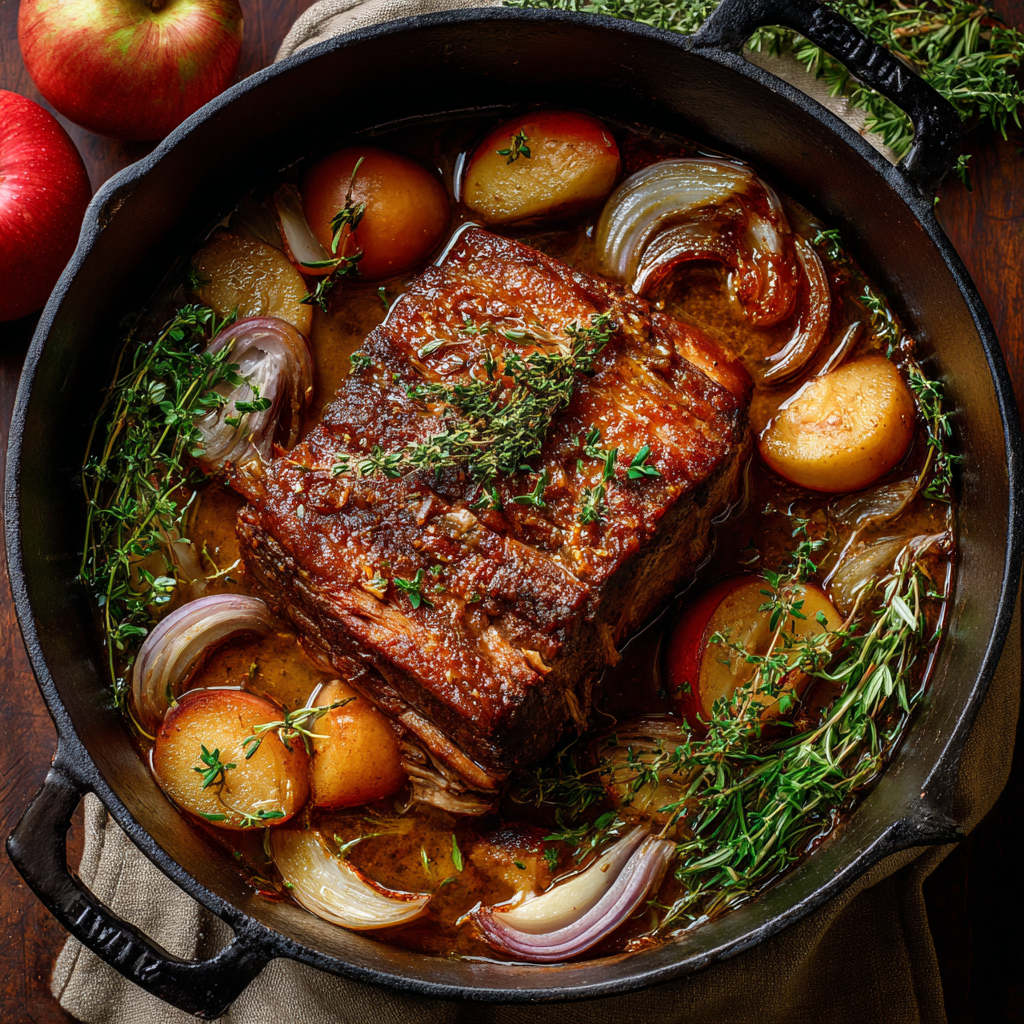
Apple Cider Braised Pork Shoulder (Cozy One-Pot Fall & Winter Dinner)
Apple Cider Braised Pork Shoulder is the kind of dish that defines comfort cooking. It’s rich without being heavy, rustic without being fussy, and deeply flavorful thanks to slow, gentle braising in fresh apple cider, aromatics, and herbs. This is the meal you make when the weather cools, when the house feels quieter, and when you want something that fills the kitchen with irresistible warmth and fragrance.
Cooked low and slow, pork shoulder transforms from a tough, hardworking cut into something luxurious and tender enough to pull apart with a spoon. Apples soften into sweet, savory wedges, onions melt into the sauce, and herbs perfume every bite. Best of all, it’s a true one-pot dinner—perfect for relaxed Sundays, holidays, or any evening when you want something impressive without constant hands-on cooking.
More breakfast ideas you’ll love
This comprehensive guide will walk you through everything you need to know to make the best Apple Cider Braised Pork Shoulder, from choosing the right cut of meat to mastering the braise, plus variations, make-ahead tips, storage, serving ideas, and more.
Why You’ll Love This Apple Cider Braised Pork Shoulder
There are countless reasons this dish earns a permanent place in your cold-weather recipe rotation:
-
Deep, balanced flavor – Savory pork, sweet apple cider, tangy Dijon, and fresh herbs create a beautifully layered sauce.
-
Minimal effort, maximum reward – Most of the cooking happens in the oven while you relax.
-
Perfect for entertaining – It feels special and rustic, yet is incredibly forgiving.
-
Great for leftovers – Like most braises, it tastes even better the next day.
-
Versatile serving options – Pair it with mashed potatoes, noodles, polenta, or crusty bread.
This is the kind of recipe that becomes a tradition—one you return to year after year when the leaves change and the air turns crisp.
What Is Apple Cider Braised Pork Shoulder?
Braising is a classic cooking technique that combines searing with slow cooking in liquid. Pork shoulder (also called Boston butt) is ideal for braising because it contains plenty of connective tissue and fat, which break down over time and create incredible tenderness.
In this recipe, the braising liquid is built around fresh apple cider (not vinegar), chicken broth, Dijon mustard, and aromatics. As the pork cooks, it releases juices into the liquid, creating a savory, slightly sweet sauce that coats every bite.
The apples and onions added near the end soften without completely disintegrating, providing texture and natural sweetness that complements the pork beautifully.
Ingredients for Apple Cider Braised Pork Shoulder
Each ingredient in this recipe has a purpose, contributing to flavor, aroma, and texture.
Main Ingredients
-
4–5 lb pork shoulder roast or Boston butt
Bone-in or boneless both work. Bone-in adds extra flavor; boneless cooks a bit faster. -
2 tablespoons neutral oil
Use avocado, vegetable, or canola oil for searing. -
Kosher salt and freshly cracked black pepper
Essential for seasoning the pork generously. -
2 cups fresh apple cider
This is the star—use unfiltered cider, not apple juice and not apple cider vinegar. -
2 cups chicken stock or broth
Adds savory depth and balances the sweetness of the cider. -
2 tablespoons Dijon mustard
Provides subtle tang and richness without overpowering the dish. -
1 tablespoon dehydrated minced onion
Enhances the savory backbone of the braising liquid.
Aromatics & Add-Ins
-
1 head of garlic, top sliced off
Roasts gently in the braise, becoming sweet and spreadable. -
3 rosemary sprigs
Earthy and aromatic, perfect for pork. -
4 thyme sprigs
Adds a soft, woodsy note that complements apples beautifully. -
1 red onion, cut into thick slices
Becomes tender and lightly sweet. -
2 firm, slightly tart apples, peeled and cut into wedges
Honeycrisp, Pink Lady, or Gala work especially well.
Choosing the Best Pork Shoulder
Not all pork cuts behave the same in long cooking. Pork shoulder is ideal because:
-
It has enough fat to stay juicy
-
It becomes fork-tender with time
-
It absorbs flavor exceptionally well
Bone-In vs Boneless
-
Bone-in pork shoulder
More flavorful, slightly longer cook time -
Boneless pork shoulder
Easier to slice or shred, cooks a bit faster
Either option works beautifully in this Apple Cider Braised Pork Shoulder.
Step-by-Step Instructions
Step 1: Prepare the Pork
Preheat your oven to 325°F (165°C).
If needed, trim away any large or thick pieces of excess surface fat from the pork shoulder. Pat the meat completely dry—this is essential for good browning.
Season generously on all sides with kosher salt and freshly cracked black pepper. Don’t be shy here; proper seasoning is key to flavorful pork.
Step 2: Sear the Pork
Heat the neutral oil in a large Dutch oven over medium-high heat.
Once the oil is shimmering, add the pork and sear for 4–5 minutes per side, until deeply golden brown. Work in batches if necessary to avoid overcrowding.
This step builds flavor—those browned bits on the bottom of the pot will enrich the braising liquid later.
Remove the pork and set aside briefly.
Step 3: Build the Braising Liquid
In a bowl or large measuring cup, whisk together:
-
Apple cider
-
Chicken broth
-
Dijon mustard
-
Dehydrated minced onion
Tie the rosemary and thyme together with kitchen twine to form an herb bundle.
Step 4: Begin the Braise
Return the pork to the Dutch oven. Pour in the braising liquid, scraping up any browned bits from the bottom of the pot.
Add the herb bundle and place the halved garlic head, cut-side down, into the liquid.
Cover the pot tightly with a lid and transfer it to the oven.
Braise for about 3 hours, turning the pork once halfway through if possible. Boneless cuts may be ready slightly earlier.
Step 5: Add Apples and Onions
Once the pork is nearly fork-tender, remove the pot from the oven.
Arrange the apple wedges and red onion slices around the pork, nestling them into the braising liquid.
Cover and return to the oven for 30–45 minutes, until the pork is extremely tender and the apples are soft but still holding their shape.
Step 6: Rest and Serve
Remove the Dutch oven from the oven and let the pork rest in the braising liquid for 30 minutes.
Squeeze the roasted garlic cloves out of their skins and stir them into the sauce or spread directly over the pork.
Taste the braising liquid and adjust seasoning with salt and pepper as needed.
Serve warm with apples, onions, and plenty of the flavorful juices spooned over the top.
Pro Tips for Perfect Apple Cider Braised Pork Shoulder
-
Use real apple cider – Apple juice is too sweet and thin.
-
Don’t rush the braise – Low heat and time are what make the pork tender.
-
Keep it covered – This prevents moisture loss and ensures even cooking.
-
Let it rest – Resting allows juices to redistribute and flavors to settle.
-
Make it ahead – Like most braised dishes, this one improves overnight.
Flavor Variations & Add-Ins
This Apple Cider Braised Pork Shoulder is wonderfully adaptable:
-
Add warmth – Include a cinnamon stick or star anise for subtle spice.
-
More savory – Add a splash of soy sauce or Worcestershire sauce.
-
Vegetable boost – Add carrots or parsnips along with the apples.
-
Herb swap – Sage works beautifully if you don’t have rosemary.
Serving Suggestions
This dish pairs well with simple, comforting sides that soak up the sauce:
-
Creamy mashed potatoes
-
Buttered egg noodles
-
Soft polenta or grits
-
Roasted root vegetables
-
Crusty bread or dinner rolls
For a lighter pairing, serve it with a crisp green salad dressed with a tangy vinaigrette.
Make-Ahead, Storage & Reheating
Make-Ahead
Apple Cider Braised Pork Shoulder is ideal for making a day in advance. Cool completely, refrigerate overnight, and reheat gently before serving.
Storage
Store leftovers in an airtight container in the refrigerator for up to 4 days.
Reheating
Reheat slowly on the stovetop or in a covered dish in the oven at 300°F (150°C) until warmed through. Add a splash of broth if needed.
PrintApple Cider Braised Pork Shoulder (Cozy One-Pot Fall & Winter Dinner)
This Apple Cider Braised Pork Shoulder is a cozy, comforting one-pot dinner that’s perfect for fall and winter. The pork is cooked low and slow until melt-in-your-mouth tender in a flavorful bath of fresh apple cider, chicken broth, onions, apples, garlic, and fresh herbs. The result is rich, savory, slightly sweet, and deeply aromatic—ideal for Sunday dinners, holidays, or any time you want a warm, rustic meal with minimal effort.
Ingredients
-
4–5 lb pork shoulder roast or Boston butt
-
2 tbsp neutral oil
-
Kosher salt and freshly cracked black pepper, to taste
-
2 cups fresh apple cider (not apple cider vinegar)
-
2 cups chicken stock or broth
-
2 tbsp Dijon mustard
-
1 tbsp dehydrated minced onion
-
1 head of garlic, top sliced off
-
3 rosemary sprigs
-
4 thyme sprigs
-
1 red onion, cut into thick slices
-
2 firm, slightly tart apples, peeled and cut into wedges
Instructions
Preheat the oven to 325°F (165°C).
Trim any large excess fat from the pork if needed. Cut into 4 large pieces, or leave whole if bone-in.
Pat the pork dry and season generously on all sides with salt and black pepper.
Heat the oil in a large Dutch oven over medium-high heat.
Sear the pork for 4–5 minutes per side, until deeply browned all over. Work in batches if needed.
While the pork sears, whisk together the apple cider, chicken broth, Dijon mustard, and dehydrated onion.
Tie the rosemary and thyme together with kitchen twine.
Return all pork to the pot and pour in the braising liquid.
Add the herb bundle and garlic head. Cover and transfer to the oven.
Braise for about 3 hours, flipping the pork halfway through (check earlier for boneless cuts).
Once the pork is nearly fork-tender, remove the pot from the oven and arrange the apples and red onions around the pork.
Cover and return to the oven for 30–45 minutes, until the pork is very tender.
Remove from the oven and let the pork rest in the braising liquid for 30 minutes.
Squeeze the roasted garlic cloves into the broth or over the pork.
Taste and adjust seasoning with salt and pepper. Serve the pork with apples, onions, and plenty of the flavorful juices spooned over the top.
Notes
-
Bone-in vs boneless: Both work well; bone-in adds extra flavor, while boneless cooks slightly faster.
-
Apple choice matters: Use firm, slightly tart apples like Honeycrisp, Pink Lady, or Gala so they hold their shape.
-
Don’t rush the cook: Low and slow is key for tender, juicy pork.
-
Make ahead: This dish tastes even better the next day as flavors deepen.
-
Serving ideas: Great with mashed potatoes, buttered noodles, polenta, or crusty bread.
Nutrition (Per Serving – Approximate)
-
Calories: 422 kcal
-
Protein: 39 g
-
Fat: 19 g
-
Saturated Fat: 5 g
-
Carbohydrates: 22 g
-
Fiber: 2 g
-
Sugar: 16 g
-
Cholesterol: 126 mg
-
Sodium: 314 mg
-
Potassium: 896 mg
Final Thoughts
Apple Cider Braised Pork Shoulder is the kind of recipe that feels like home. It’s warm, comforting, and deeply satisfying, with flavors that echo everything we love about fall and winter cooking. The combination of tender pork, sweet apples, aromatic herbs, and a rich cider-infused sauce creates a dish that’s both rustic and elegant.
What makes this recipe truly special is its simplicity. With just a handful of ingredients and one pot, you can create a meal that feels slow-cooked and special without spending all day in the kitchen. It’s forgiving, flexible, and almost impossible to mess up—exactly the kind of dish you want when cooking for family, friends, or a cozy night in.